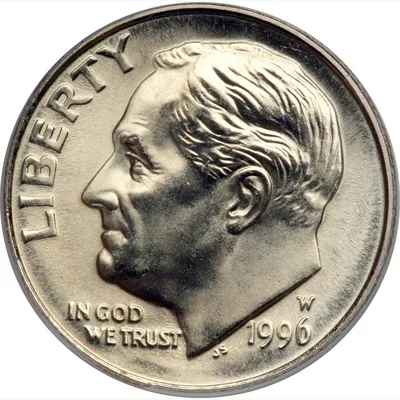
Obverse
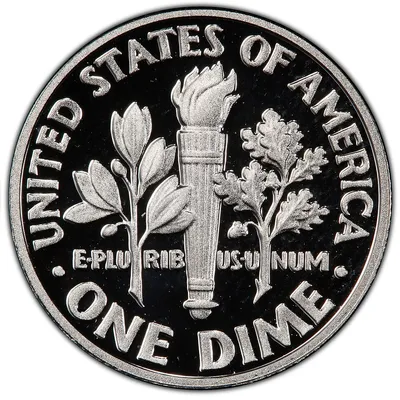
Reverse
1955 Roosevelt Dime
$19 – $910
The 1955 Roosevelt Dime was minted at the Philadelphia Mint with a mintage of 12,450,182. Values range from $19 in lower grades to $910 in top condition. This is a key date, making it especially sought-after by collectors. The coin contains 90% silver with a melt value of $2.21.
Melt Value (90% silver)
$2.21
Based on $30.50/oz silver
as of Aug 1, 2026
Market Activity
2 recent salesCoinValueDB Price Guide by Grade
| Grade | Value |
|---|---|
Good (G-4)
| $19 |
Very Good (VG-8)
| $22 |
Fine (F-12)
| $27 |
Very Fine (VF-20)
| $28 |
Extremely Fine (EF-40)
| $29 |
About Uncirculated (AU-50)
| $39 |
Mint State (MS-60)
| $45 |
Choice (MS-63)
| $79 |
Gem (MS-65)
Best Value
| $200 |
Superb Gem+ (MS-67)
| $910 |
Coin Specifications
Historical Notes
The 1955 is a key date for Roosevelt dimes with its relatively low Philadelphia mintage.
About the Roosevelt Dime
The Roosevelt dime replaced the Mercury dime in 1946 to honor President Franklin D. Roosevelt after his death in 1945. Chief Engraver John R. Sinnock designed the coin, featuring Roosevelt’s portrait on the obverse and an olive branch, a torch, and an oak branch on the reverse. The U.S. Mint selected Sinnock because he already designed the Roosevelt inaugural medal. His initials, JS, appear at the base of the neck on the obverse. Production changed significantly in 1965 when the Mint removed silver from the composition. Coins minted from 1946 through 1964 contain 90% silver, while coins from 1965 to the present use a copper-nickel clad composition. The Mint moved the mint mark from the reverse to the obverse above the date in 1968. The series remains in production today, making it one of the longest-running active designs in American coinage.
Collecting Roosevelt Dime Coins
Start your collection with the copper-nickel clad issues from 1965 to the present, as you can find most of these in circulation for face value. Look for high-grade examples of the 1996-W dime, which was the first coin to feature a W mint mark for circulation, with a mintage of only 1,457,000. Silver issues from 1946 to 1964 remain affordable and provide a great way to own precious metal coins. Watch for weak strikes on the torch bands on the reverse, as fully split bands increase the value of the coin significantly. Avoid cleaning your coins, as even light polishing destroys the numismatic value.
This series includes key dates — check individual coin pages for rarity details.
Frequently Asked Questions
What is a 1955 Roosevelt Dime worth? +
How many 1955 Roosevelt Dime coins were made? +
Is the 1955 Roosevelt Dime a key date? +
What is the melt value of a 1955 Roosevelt Dime? +
Is the 1955 Roosevelt Dime rare? +
How much is a 1955 Roosevelt Dime worth? +
Related Guides
Related Roosevelt Dime Coins
1955-D Roosevelt Dime
Denver
$2.5 – $165
1949-S Roosevelt Dime
San Francisco
$21 – $1,075
1950-S Roosevelt Dime
San Francisco
$2.5 – $160
1968 No S Roosevelt Dime Proof
Philadelphia
$36 – $1,775
1946 Roosevelt Dime
P
$2.5 – $115
1946 D Roosevelt Dime
D
$3 – $150
1946 S Roosevelt Dime
S
$3 – $130
1949 Roosevelt Dime
P
$20 – $900
Have a dime? Scan it now.
Get instant identification, condition grading, and market value.
Scan Now — It's Free