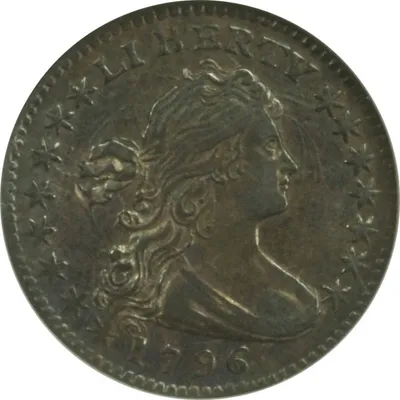
Obverse
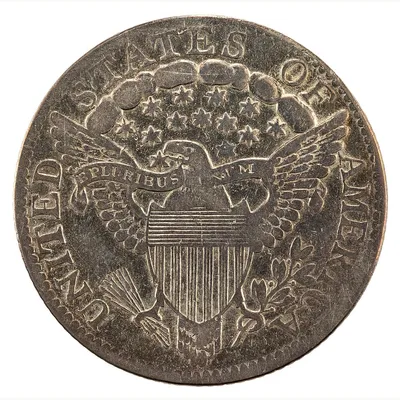
Reverse
1796 Draped Bust Quarter Value & Price Guide
$40,575 – $34,171,000
The 1796 Draped Bust Quarter was minted at the Philadelphia Mint with a mintage of 6,146. Values range from $40,575 in lower grades to $34,171,000 in top condition. This is a key date, making it especially sought-after by collectors.
Market Activity
11 recent salesCoinValueDB Price Guide by Grade
| Grade | Value |
|---|---|
Good (G-4)
| $27,788 |
Very Good (VG-8)
| $71,475 |
Fine (F-12)
| $64,063 |
Very Fine (VF-20)
| $170,875 |
Extremely Fine (EF-40)
| $217,713 |
About Uncirculated (AU-50)
| $530,700 |
Choice AU (AU-55)
| $135,000 |
Mint State (MS-60)
| $471,350 |
Mint State (MS-61)
| $200,000 |
Choice (MS-63)
| $969,850 |
Near Gem (MS-64)
| $260,000 |
Gem (MS-65)
Best Value
| $4,407,875 |
Superb Gem (MS-66)
| $2,500,000 |
Superb Gem+ (MS-67)
| $34,171,000 |
Recent eBay Sales
Coin Specifications
About the Draped Bust Quarter
The Draped Bust Quarter debuted in 1796 as the first quarter dollar issued by the United States Mint. Robert Scot, the first Chief Engraver of the Mint, designed the coin based on sketches by artist Gilbert Stuart. The obverse features a portrait of Liberty with flowing hair, while the reverse displays a small eagle surrounded by a palm and olive branch. The Mint produced this coin to fill a gap in the decimal currency system, although they did not strike another quarter until 1804. Production resumed in 1804 with a new reverse design featuring a heraldic eagle, a change necessitated by the Coinage Act of 1792 requirements. The series ended in 1807 when the Mint transitioned to the Capped Bust design. You hold a piece of early American history, as the total mintage for the entire series remains under 50,000 coins across all years. The 1796 date is the only year for the Small Eagle reverse, making it the key date for any collection.
Collecting Draped Bust Quarter Coins
Focus your search on the 1806 or 1807 dates if you want the most affordable entry point into this series. Most surviving coins show heavy circulation wear because these pieces circulated for decades. Check for damage like cleaned surfaces or smoothed fields, as these drastically reduce value. High-grade specimens often contain hidden repairs or artificial toning, so buy coins certified by major grading services like PCGS or NGC. Avoid raw coins found in online auctions unless you have experience spotting the frequent counterfeits that plague early federal coinage.
Frequently Asked Questions
What is a 1796 Draped Bust Quarter worth? +
How many 1796 Draped Bust coins were made? +
Is the 1796 Draped Bust Quarter a key date? +
How much is a 1796 Draped Bust Quarter worth? +
Is the 1796 Draped Bust Quarter rare? +
Related Guides
Have a quarter? Scan it now.
Get instant identification, condition grading, and market value.
Scan Now — It's Free