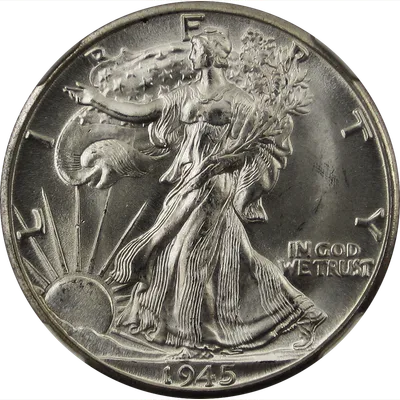
Obverse
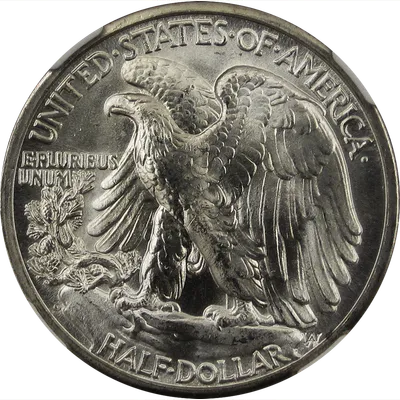
Reverse
1919 D Walking Liberty Half Dollar
$105 – $12,925
The 1919 D Walking Liberty Half Dollar was minted at the Denver Mint with a mintage of 1,165,000. Values range from $105 in lower grades to $12,925 in top condition. This is a key date, making it especially sought-after by collectors.
Market Activity
CoinValueDB Price Guide by Grade
| Grade | Value |
|---|---|
Good (G-4)
| $80 |
Very Good (VG-8)
| $110 |
Fine (F-12)
| $115 |
Very Fine (VF-20)
| $125 |
Extremely Fine (EF-40)
| $218 |
About Uncirculated (AU-50)
| $170 |
Mint State (MS-60)
| $780 |
Choice (MS-63)
| $1,283 |
Near Gem (MS-64)
| $3,250 |
Gem (MS-65)
Best Value
| $6,125 |
Superb Gem (MS-66)
| $50,000 |
Superb Gem+ (MS-67)
| $43,963 |
Coin Specifications
About the Walking Liberty Half Dollar
The Walking Liberty Half Dollar series ran from 1916 to 1947. Treasury Secretary William McAdoo commissioned the new design to replace the Barber Half Dollar. Adolph A. Weinman won the design competition over several other prominent artists. His work features Lady Liberty striding toward the dawn with an American flag draped over her shoulders. The reverse side depicts a bald eagle perched on a mountain crag. Weinman moved the mint mark from the obverse to the reverse in 1917. The series ended in 1947 when the United States Mint replaced the design with the Franklin Half Dollar. The 1916-1947 run covers the period encompassing both World Wars and the Great Depression. You are holding a piece of silver coinage that was a staple of American commerce for over three decades.
Collecting Walking Liberty Half Dollar Coins
Start your collection with common dates from the 1940s, as these are often available in circulated condition for prices near their silver melt value. Focus on finding coins with clear details on Liberty's skirt lines and the eagle's breast feathers, as these areas wear down quickly. Watch for the 1921, 1921-D, and 1921-S dates because these are the rarest issues in the series with extremely low mintages. Examine coins carefully for altered mint marks, especially on the 1916-D and 1921-D dates. Buy coins in professional holders from PCGS or NGC if you plan to spend significant money on high-grade pieces.
This series includes key dates — check individual coin pages for rarity details.
Frequently Asked Questions
What is a 1919 D Walking Liberty Half Dollar worth? +
How many 1919 Walking Liberty Half Dollar coins were made? +
Is the 1919 D Walking Liberty Half Dollar a key date? +
How much is a 1919-D Walking Liberty Half Dollar worth? +
Is the 1919-D Walking Liberty Half Dollar rare? +
Related Guides
Related Walking Liberty Half Dollar Coins
1919 Walking Liberty Half Dollar
P
$30 – $3,875
1916 Walking Liberty Half Dollar
P
$28 – $3,525
1916 D Walking Liberty Half Dollar
D
$20 – $2,675
1916 S Walking Liberty Half Dollar
S
$100 – $12,375
1917 Walking Liberty Half Dollar
P
$18 – $2,400
1918 Walking Liberty Half Dollar
P
$19 – $3,175
1918 D Walking Liberty Half Dollar
D
$18 – $2,800
1918 S Walking Liberty Half Dollar
S
$16 – $2,350
Have a half dollar? Scan it now.
Get instant identification, condition grading, and market value.
Scan Now — It's Free