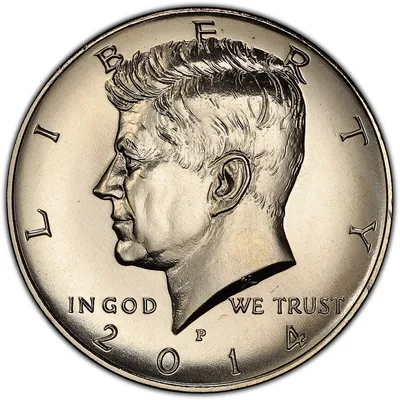
Obverse
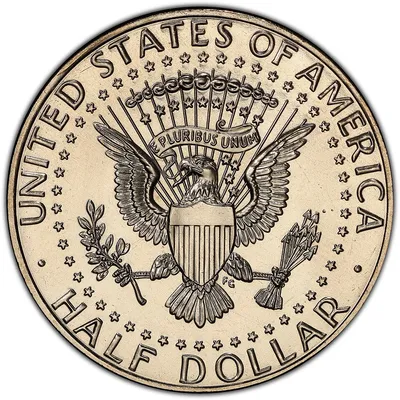
Reverse
1974-D Kennedy Half Dollar Double Die Obverse
$1 – $120
The Kennedy Half Dollar - 1974-D Double Die Obverse was minted at the Denver Mint with a mintage of 25,098,000. Values range from $1 in lower grades to $120 in top condition. This is a semi-key date with strong collector demand.
Market Activity
CoinValueDB Price Guide by Grade
| Grade | Value |
|---|---|
Good (G-4)
| $1 |
Very Good (VG-8)
| $2 |
Fine (F-12)
| $2 |
Very Fine (VF-20)
| $3 |
Extremely Fine (EF-40)
| $2 |
About Uncirculated (AU-50)
| $4 |
Mint State (MS-60)
| $5 |
Choice (MS-63)
| $7 |
Near Gem (MS-64)
| $10 |
Gem (MS-65)
Best Value
| $19 |
Superb Gem (MS-66)
| $35 |
Superb Gem+ (MS-67)
| $273 |
Coin Specifications
Historical Notes
Notable doubled die obverse variety that is sought after by variety collectors.
About the Kennedy Half Dollar
The Kennedy Half Dollar began production in 1964 to honor President John F. Kennedy after his assassination in November 1963. Chief Engraver Gilroy Roberts designed the obverse portrait, while Frank Gasparro designed the reverse featuring the Presidential Seal. The Mint rushed production to release the coins by March 1964. They replaced the Franklin Half Dollar series after only 16 years of production. The silver content dropped from 90% in 1964 to 40% from 1965 through 1970. The Mint removed silver entirely starting in 1971. The reverse design changed temporarily in 1975 and 1976 to feature Independence Hall for the Bicentennial. The series remains in production today, though the Mint stopped issuing these coins for general circulation in 2002.
Varieties
Doubled Die Obverse (DDO)
Think you have an error or variety? Scan it for free.
Collecting Kennedy Half Dollar Coins
Start your collection with the copper-nickel coins from 1971 to the present, as you can often find these in circulation for face value. Look for the 1964 90% silver coins and the 1965-1970 40% silver issues to build value. High-grade specimens from the 1970s often show bag marks or abrasions on the cheek of the portrait, so use a magnifying glass to check for surface wear. Avoid buying cleaned coins, as they lose significant numismatic value. You rarely find counterfeits of common dates, but always weigh silver issues on a digital scale if you suspect a fake.
Frequently Asked Questions
What is a Kennedy Half Dollar - 1974-D Double Die Obverse worth? +
How many 1974 Kennedy Half Dollar coins were made? +
Is the Kennedy Half Dollar - 1974-D Double Die Obverse a key date? +
How much is a 1974-D Doubled Die Obverse Kennedy Half Dollar worth? +
Is the 1974-D Kennedy Half Dollar rare? +
Related Guides
Related Kennedy Half Dollar Coins
Kennedy Half Dollar - 1964
Philadelphia
$11 – $490
Kennedy Half Dollar - 1964-D
Denver
$14 – $500
Kennedy Half Dollar - 1964-S
San Francisco
$12 – $450
Kennedy Half Dollar - 1965 (40% Clad)
Philadelphia
$4 – $295
Kennedy Half Dollar - 1965-D (40% Clad)
Denver
$4.5 – $250
Kennedy Half Dollar - 1966 (40% Clad)
Philadelphia
$4.5 – $285
Kennedy Half Dollar - 1967 (40% Clad)
Philadelphia
$5 – $265
Kennedy Half Dollar - 1968 (40% Clad)
Philadelphia
$0.75 – $92
Have a half dollar? Scan it now.
Get instant identification, condition grading, and market value.
Scan Now — It's Free