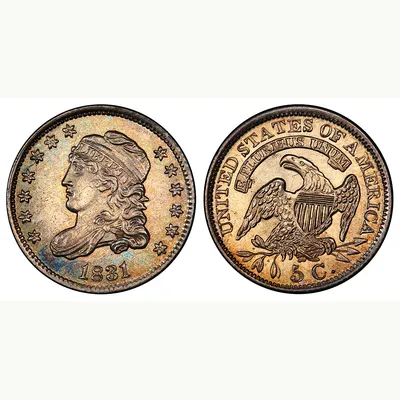
Obverse
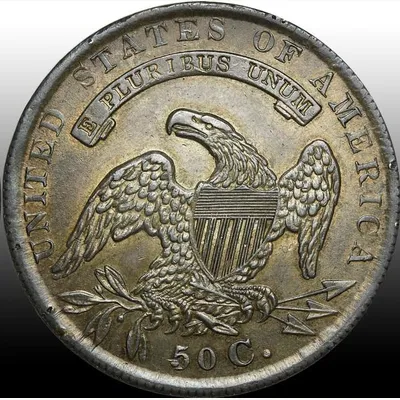
Reverse
1838 Capped Bust Half Dollar (Reeded Edge) Value & Price Guide
$105 – $71,675
The 1838 Capped Bust Half Dollar (Reeded Edge) was minted at the Philadelphia Mint with a mintage of 3,546,000. Values range from $105 in lower grades to $71,675 in top condition.
Market Activity
CoinValueDB Price Guide by Grade
| Grade | Value |
|---|---|
Good (G-4)
| $740 |
Very Good (VG-8)
| $135 |
Fine (F-12)
| $210 |
Very Fine (VF-20)
| $310 |
Extremely Fine (EF-40)
| $2,430 |
About Uncirculated (AU-50)
| $925 |
Choice AU (AU-55)
| $6,500 |
Mint State (MS-60)
| $7,250 |
Choice (MS-63)
| $13,775 |
Near Gem (MS-64)
| $50,000 |
Gem (MS-65)
Best Value
| $51,050 |
Superb Gem+ (MS-67)
| $71,675 |
Coin Specifications
About the Capped Bust Half Dollar
The Capped Bust Half Dollar series began in 1807 to replace the Draped Bust design. Mint Director Robert Patterson hired German immigrant John Reich to redesign the coinage. Reich earned a salary of $600 a year for his work as an assistant engraver. He depicted Liberty wearing a cloth cap, a symbol of freedom from the French Revolution. This design gave the coins a more uniform look and improved the strike quality across the series. The series lasted until 1839. In 1836, the Mint transitioned from screw presses to steam-powered coining presses. This shift forced a change in the manufacturing process and design specifications. The Mint also removed the '50 CENTS' denomination from the reverse and moved it to the obverse as '50 C.' in 1837. Christian Gobrecht updated the design in 1839, marking the end of the Capped Bust era before the introduction of the Seated Liberty design.
Collecting Capped Bust Half Dollar Coins
Focus on finding common dates like 1834, 1835, or 1836 to start your collection. These years saw high production numbers and offer the best entry point for new collectors. Look for coins with original, problem-free surfaces, as many pieces show signs of harsh cleaning or deep scratches. Avoid coins with smoothed-over fields or unnatural toning. Check the edges for file marks, which often indicate counterfeit attempts or attempts to remove silver from the coin. Buy coins in Very Good to Fine condition to get the most value for your money.
This series includes key dates — check individual coin pages for rarity details.
Frequently Asked Questions
What is a 1838 Capped Bust Half Dollar (Reeded Edge) worth? +
How many 1838 Capped Bust coins were made? +
Is the 1838 Capped Bust Half Dollar (Reeded Edge) a key date? +
How much is an 1838 Capped Bust Half Dollar worth? +
Is the 1838 Capped Bust Half Dollar considered rare? +
Related Guides
Related Capped Bust Half Dollar Coins
1807 Capped Bust Half Dollar
P
$205 – $190,650
1809 Capped Bust Half Dollar
P
$625 – $481,775
1811 Capped Bust Half Dollar
P
$105 – $91,475
1813 Capped Bust Half Dollar
P
$610 – $438,375
1815 Capped Bust Half Dollar
P
$565 – $470,825
1817 Capped Bust Half Dollar
P
$555 – $416,400
1820 Capped Bust Half Dollar
P
$625 – $485,450
1822 Capped Bust Half Dollar
P
$150 – $131,000
Have a half dollar? Scan it now.
Get instant identification, condition grading, and market value.
Scan Now — It's Free