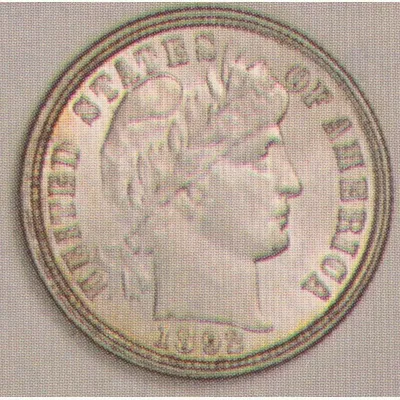
Obverse
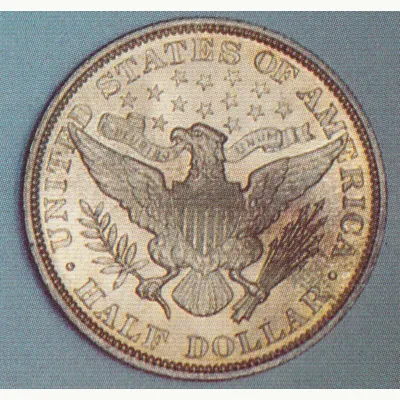
Reverse
1914 Barber Half Dollar
$53 – $73,500
The 1914 Barber Half Dollar was minted at the Philadelphia Mint with a mintage of 124,610,000. Values range from $53 in lower grades to $73,500 in top condition. This is a key date, making it especially sought-after by collectors. The coin contains 90% silver with a melt value of $11.03.
Melt Value (90% silver)
$11.03
Based on $30.50/oz silver
as of Aug 1, 2026
Market Activity
2 recent salesCoinValueDB Price Guide by Grade
| Grade | Value |
|---|---|
Good (G-4)
| $53 |
Very Good (VG-8)
| $118 |
Fine (F-12)
| $160 |
Very Fine (VF-20)
| $325 |
Extremely Fine (EF-40)
| $510 |
About Uncirculated (AU-50)
| $790 |
Mint State (MS-60)
| $1,400 |
Choice (MS-63)
| $1,850 |
Gem (MS-65)
Best Value
| $7,350 |
Superb Gem+ (MS-67)
| $73,500 |
Coin Specifications
Historical Notes
The 1914 is a key date from the final years of the Barber Half Dollar series.
About the Barber Half Dollar
The Barber Half Dollar series began in 1892 and ended in 1915. Mint Director Edward Leech commissioned Charles E. Barber, the Chief Engraver of the United States Mint, to create the new design. Barber replaced the long-running Seated Liberty design to modernize the appearance of United States coinage. His design features a portrait of Liberty facing right, wearing a Phrygian cap and a laurel wreath. The reverse displays a heraldic eagle clutching an olive branch and arrows. Production ceased in 1915 because the Mint transitioned to the Walking Liberty design in 1916. The series contains 74 different date and mint mark combinations. Collectors often focus on the key dates like the 1892-O, the 1892-S, and the 1914. You hold a piece of history that circulated during a period of rapid industrial growth in America.
Collecting Barber Half Dollar Coins
Start your collection with common dates like 1907 or 1908 in good to fine condition to learn the series without high costs. Barber Half Dollars suffer from wear on the high points, specifically the hair above Liberty's forehead and the eagle's breast. Always check for signs of cleaning or artificial toning, as these lower the value significantly. Watch for fake mint marks added to common 1907 Philadelphia coins to mimic rare branch mint issues. Use a 10x jeweler's loupe to inspect the mint mark area for tool marks or inconsistent metal flow.
This series includes key dates — check individual coin pages for rarity details.
Frequently Asked Questions
What is a 1914 Barber Half Dollar worth? +
How many 1914 Barber Half Dollar coins were made? +
Is the 1914 Barber Half Dollar a key date? +
What is the melt value of a 1914 Barber Half Dollar? +
How much is a 1914 Barber Half Dollar worth? +
Is the 1914 Barber Half Dollar rare? +
Related Guides
Related Barber Half Dollar Coins
1892-S Barber Half Dollar
San Francisco
$65 – $78,900
1893-S Barber Half Dollar
San Francisco
$100 – $90,700
1897-S Barber Half Dollar
San Francisco
$88 – $103,375
1904-S Barber Half Dollar
San Francisco
$63 – $75,875
1913 Barber Half Dollar
Philadelphia (no mint mark)
$63 – $60,800
1915 Barber Half Dollar
Philadelphia (no mint mark)
$62 – $62,125
Have a half dollar? Scan it now.
Get instant identification, condition grading, and market value.
Scan Now — It's Free