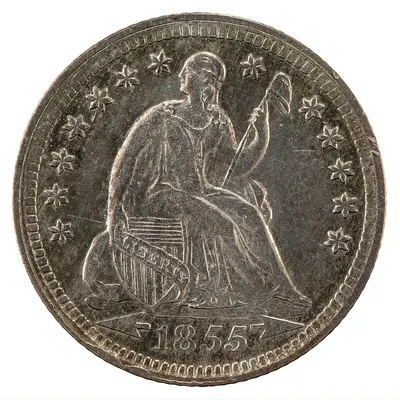
Obverse
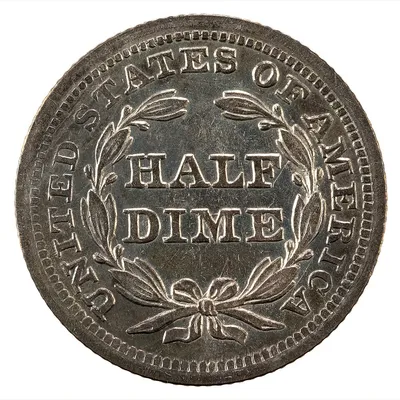
Reverse
1865 Seated Liberty Dime
$54 – $34,475
The Seated Liberty Dime - 1865 was minted at the Philadelphia Mint with a mintage of 30,000. Values range from $54 in lower grades to $34,475 in top condition. This is a semi-key date with strong collector demand. The coin contains 90% silver with a melt value of $2.36.
Melt Value (90% silver)
$2.36
Based on $30.50/oz silver
as of Aug 1, 2026
Market Activity
CoinValueDB Price Guide by Grade
| Grade | Value |
|---|---|
Good (G-4)
| $54 |
Very Good (VG-8)
| $72 |
Fine (F-12)
| $82 |
Very Fine (VF-20)
| $140 |
Extremely Fine (EF-40)
| $305 |
About Uncirculated (AU-50)
| $380 |
Mint State (MS-60)
| $725 |
Choice (MS-63)
| $1,250 |
Gem (MS-65)
Best Value
| $4,675 |
Superb Gem+ (MS-67)
| $34,475 |
Coin Specifications
Historical Notes
1865 Seated Liberty Dime from the Civil War era, low mintage.
About the Seated Liberty Dime
The Seated Liberty Dime debuted in 1837 to replace the Capped Bust design. Christian Gobrecht designed the coin based on sketches by Thomas Sully and Titian Peale. The obverse shows Lady Liberty sitting on a rock, holding a shield and a pole with a liberty cap. This design brought a more neoclassical look to American coinage. Changes occurred throughout the series run. The mint added stars to the obverse in 1838. They added rays to the background of the reverse in 1853 to mark a reduction in the coin's weight. Arrows appeared at the date in 1853 and 1873 to note further weight adjustments. The Mint ended the series in 1891 when the Barber Dime replaced it.
Collecting Seated Liberty Dime Coins
Focus on the later dates from the 1880s to build a starter set because these are the most affordable. Many Seated Liberty Dimes suffer from heavy wear or harsh cleanings that ruin their value. Look for coins with original surfaces and avoid pieces that look shiny or unnatural. Check for the 1873-CC variety, as it is a rare issue that attracts many forgers. Buy coins in grades of Fine or Very Fine to balance quality with cost.
Frequently Asked Questions
What is a Seated Liberty Dime - 1865 worth? +
How many 1865 Seated Liberty Dime coins were made? +
Is the Seated Liberty Dime - 1865 a key date? +
What is the melt value of a Seated Liberty Dime - 1865? +
How much is an 1865 Seated Liberty Dime worth? +
Is the 1865 Seated Liberty Dime considered rare? +
Related Guides
Related Seated Liberty Dime Coins
Have a dime? Scan it now.
Get instant identification, condition grading, and market value.
Scan Now — It's Free